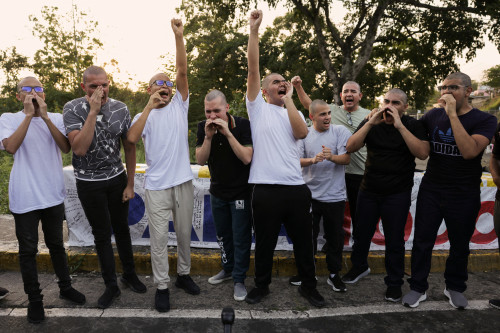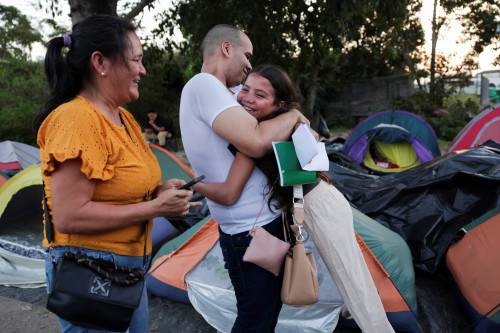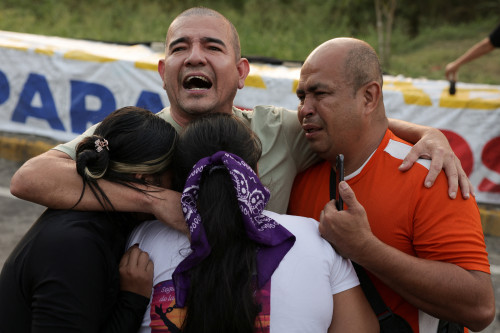
Feb 23 (Reuters) – Nearly 2,200 people have been released from Venezuelan jails or had other legal restrictions withdrawn since the start of a new amnesty law, ruling party lawmaker Jorge Arreaza said on Monday.
The law, passed last week, has been critiqued by human rights organizations which say it falls short of offering relief for hundreds of political prisoners. It provides amnesty for involvement in political protests and “violent actions” during specific months between 2002 and 2025, but does not detail the exact crimes that are eligible.
Though the government has always denied holding political prisoners and says those jailed have committed crimes, Interim President Delcy Rodriguez had already released hundreds of people who rights groups classify as political prisoners prior to the passage of the law. The effort is seen as part of a package of deals key to normalizing relations with the U.S. following the capture of President Nicolas Maduro in January.
Venezuela’s opposition and human rights groups have said for years the government uses detentions to stamp out dissent.
“Today we can say that thanks to the law 177 releases have taken place and 2,021 people who were under presentation restrictions have been given full liberations,” said Arreaza, the president of the legislative commission set up to monitor the implementation of the law, speaking alongside Rodriguez at the presidential palace.
People released from jail in Venezuela can be held on house arrest or required to regularly report to police or courts for a specific period.
More than 3,000 requests have been made by attorneys and others on behalf of prisoners who want to benefit from the law, Arreaza added. Tribunals must decide on requests within 15 days, according to the law.
The law does not return seized assets, revoke public office bans given for political reasons or cancel sanctions against media outlets. It also requires those living abroad who are facing charges to appear in person in Venezuela to have their amnesty granted.
The law will only cover “people who have ceased the execution of the actions which constitute crimes,” a specification which may leave out many in the opposition who have continued their activism from other countries.
Meanwhile, Alfredo Romero, the director of legal rights group Foro Penal, said more than 30 people had been released from the Rodeo detention center near Caracas on Monday, joining others released from various facilities over the weekend.
Foro Penal said on Sunday more than 460 people have been freed since January 8, a count which does not include those released from prison but given house arrest or other restrictive measures.
Opposition politicians, dissident members of the security services, journalists and rights activists have long been subject to charges like terrorism and treason, which they, their families and their lawyers say are unjust and arbitrary.
Among the prominent released figures are opposition politician Juan Pablo Guanipa, who was freed, detained again and then later released from a house arrest order, and lawyer Perkins Rocha, who is under house arrest. Both men are close allies of Nobel Peace Prize winner and opposition leader Maria Corina Machado.
Also freed since January are opposition leader Freddy Superlano, who remains under house arrest, Rafael Tudares, the son-in-law of former opposition presidential candidate Edmundo Gonzalez, and Javier Tarazona, the director of an NGO.
(Reporting by Reuters; Editing by Lincoln Feast.)