Here’s what happened before the market opened today.
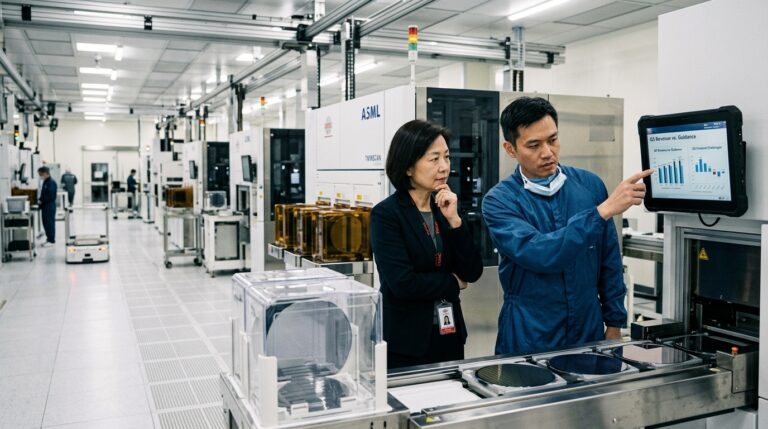
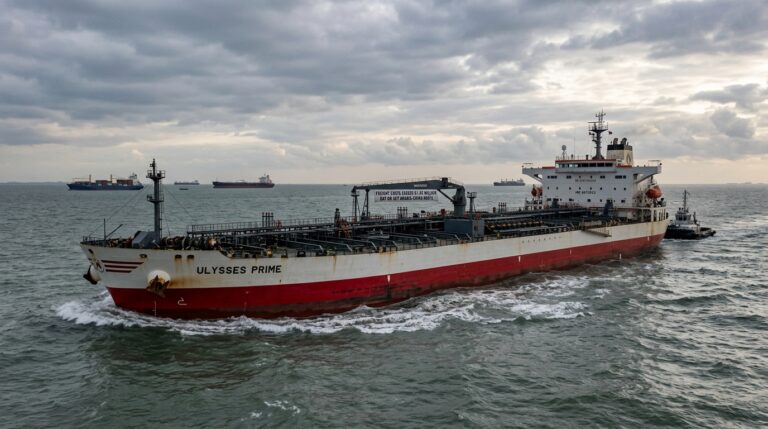
President Trump declared the U.S.-Iran memorandum of understanding effectively over. Fresh strikes were exchanged overnight. Iran hit three commercial vessels near the Strait of Hormuz. The U.S. revoked Iran’s license to sell oil on the global market. By 9:45 a.m. Eastern, the Dow was down more than 500 points, Brent crude had surged past $78 a barrel, and semiconductor stocks were getting hit from a completely different direction.
Most investors looked at that and saw an oil trade. Some saw a defense trade. The part almost nobody read was the one that actually matters — because it was signed six days ago and it doesn’t care what Trump says at a NATO summit.
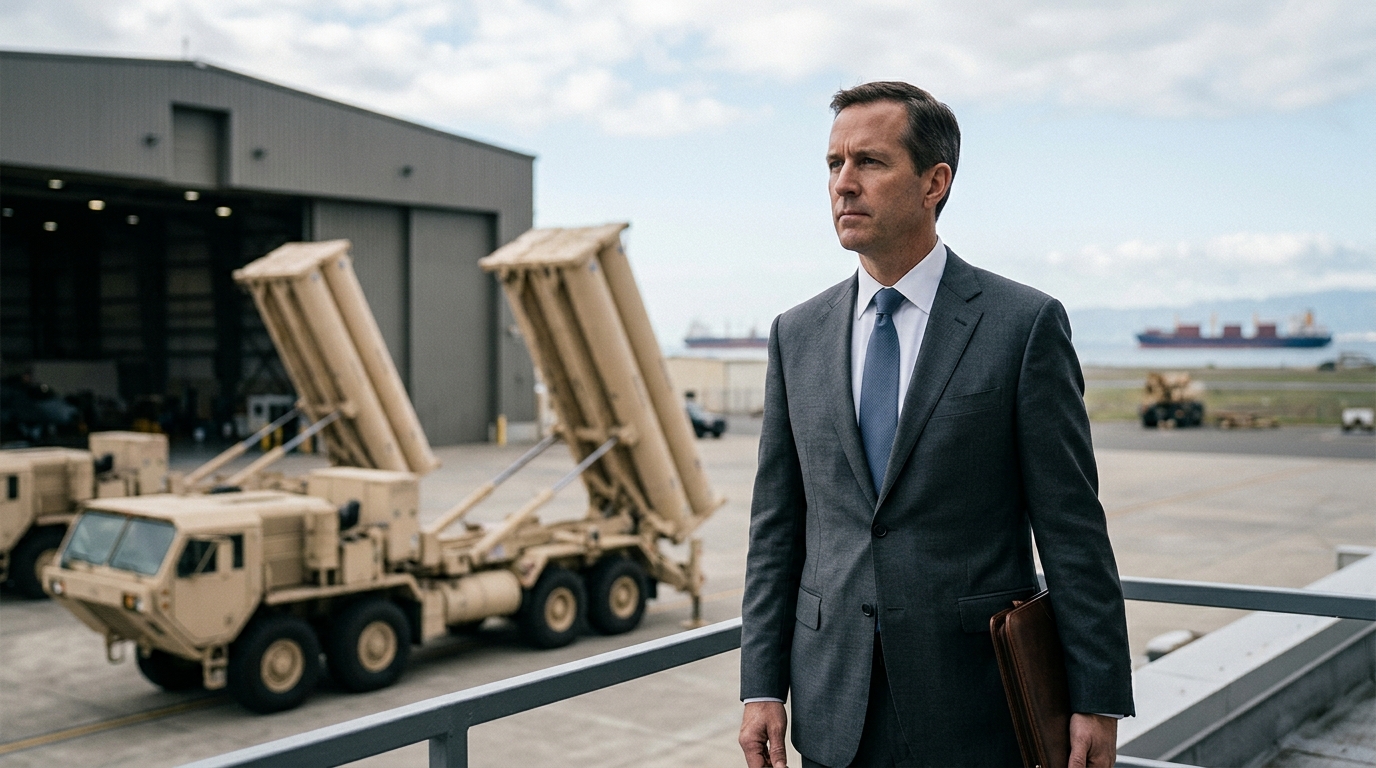
On June 24, the Missile Defense Agency awarded Lockheed Martin a sole-source, fixed-price contract worth $35.3 billion to mass-produce Terminal High Altitude Area Defense interceptors through June 2032. The deal quadruples annual THAAD output — from 96 missiles to as many as 400 per year. One offer was solicited. One was received. That’s not a competitive market. That’s a monopoly with a government purchase order attached to it.
The reason is not complicated. The spring conflict with Iran consumed up to 80% of the U.S. THAAD inventory defending forces and partners in the region. The Army has used between 190 and 290 of its prewar inventory of 360 THAAD interceptors, according to CSIS analysis. The Navy fired more than 1,000 Tomahawks. The stockpile isn’t low. It’s nearly gone.
And now the ceasefire is over.
What the Market Got Wrong in June
When the U.S. and Iran signed their memorandum of understanding on June 17, defense stocks sold off hard. Northrop Grumman dropped 6%. RTX fell. Lockheed gave back a chunk of its spring gains. The logic was straightforward: peace means less demand for missiles.
That logic was wrong, and a few people said so at the time.
The stockpile replenishment cycle doesn’t end with a ceasefire. The U.S. military fired those interceptors. They are gone. Someone has to build replacements regardless of whether Trump and Tehran are talking. That’s not a geopolitical bet. That’s a manufacturing contract. The $35.3 billion THAAD award is the most concrete evidence yet of how that math actually works in practice.
Slight tangent, but it matters: the White House separately sent Congress a supplemental funding request of $87.6 billion in late June — $67 billion of that for the Pentagon. The package includes $21 billion to rebuild munitions stockpiles and $17.3 billion for operational costs from the Iran conflict. The request is politically complicated. But what’s already been awarded — the THAAD megadeal, PAC-3 ramps, HIMARS contracts — doesn’t need congressional approval. That money is committed.
The Numbers Behind the Trade
Lockheed Martin (LMT) enters today with a $194 billion backlog — roughly 2.5 times its annual revenue. Management guided 2026 revenue between $77.5 billion and $80 billion, with EPS expected to rise 37% year-over-year to a range of $29.35 to $30.25. Free cash flow is guided at $6.5 to $6.8 billion. PAC-3 production is ramping from 600 to 2,000 units annually. THAAD is now scaling to 400 units per year from 96.
That earnings growth rate was set before today. Before the ceasefire collapsed. Before Iran started hitting Qatari LNG tankers again.
The Iran war, as Lockheed’s own analysis team has framed it, is incremental demand on top of an already committed production ramp. The backlog existed. The contracts existed. What the war did was empty the warehouses faster, which accelerated the urgency of every restocking order that was already in the pipeline.
On a forward PEG basis, LMT at roughly 1.18 times is the cheapest major defense contractor among its direct peers — cheaper than Northrop Grumman at a PEG near 3.59, cheaper than RTX near 2.94, cheaper than General Dynamics near 2.43. That’s the part of the valuation conversation most investors skip when they look at the trailing P/E and decide the stock has already run.
The Sector Implications Nobody Is Talking About
RTX Corporation holds a $268 billion backlog. Its Raytheon division is the primary manufacturer of Patriot interceptors. Trump has already pressed contractors to triple Patriot interceptor production — a demand that doesn’t disappear because a ceasefire briefly held. Collins Aerospace and Pratt and Whitney, RTX’s other two divisions, provide the commercial aviation cushion that makes RTX the most diversified name in the sector. Whether today’s headlines say escalation or negotiation, RTX has revenue coming from engines, avionics, and missile defense simultaneously.
Northrop Grumman sits on a $95.7 billion backlog led by the B-21 Raider bomber and the Sentinel ICBM program. Those are decade-scale programs. A one-day ceasefire collapse doesn’t move that math. Northrop reports July 21. Watch that number carefully — not for revenue, but for what management says about production rate increases and margin trajectory on the B-21.
The defense budget framework has also structurally shifted. Trump’s fiscal 2027 defense request totals $1.5 trillion — the first time base budget defense spending has reached $1 trillion. The Golden Dome missile defense program alone carries a $185 billion official cost estimate, with some analysts projecting far more depending on the final architecture. That is not a single fiscal year event. That is a decade of procurement flowing through the same contractors building THAAD interceptors today.
The Options Market Picture
Defense stocks sold off on peace. Now peace is unraveling. That creates a specific dynamic in the options market worth watching. LMT implied volatility tends to compress during ceasefire periods and expand on re-escalation. Today’s news is a re-escalation event, which means IV is likely rising into a fundamental thesis that just got stronger, not weaker. For traders expecting continued conflict pressure, call spreads in LMT structured around the Q2 earnings report — due July 22 — offer a defined-risk way to participate in what could be a double catalyst: both re-escalation premium and a THAAD-driven earnings upside surprise. The bull case is straightforward: $35.3 billion sole-source contract, 37% EPS growth guide, and a geopolitical environment that just got more dangerous. The bear case is that the supplemental funding request fails in Congress and the re-escalation fades within days. The neutral case is that the backlog holds but multiples compress further on inflation fears from rising oil prices — which is the real secondary risk here, since markets are now pricing in roughly a 50% chance of a Fed rate hike in September as energy prices reignite inflation concerns.
What to Watch Next
The question for investors is not whether Lockheed Martin benefits from today’s news. It does, structurally, mechanically, contractually. The question is whether the market is going to re-rate that benefit this week or wait until July 22 when the company reports Q2 results.
History says the market usually waits. Defense stocks sold off in April on peace hopes. They never fully recovered the war premium. Now the peace is gone. The production contracts are still in place. The backlog is still $194 billion. The THAAD deal still closes regardless of what happens in the Strait of Hormuz tonight.
What’s interesting is that money is rotating out of tech and into healthcare, financials, and transports this week as the correction in AI infrastructure names widens. Defense could be the next rotation destination — not because of geopolitics, but because of a $194 billion backlog and a 37% earnings growth guide that doesn’t require the war to continue. The war just being real enough that nobody cancels the restocking orders is sufficient. And today made that more likely, not less.
The July 22 earnings call is where this gets answered. Management will either confirm that the THAAD ramp is on schedule and PAC-3 production is accelerating — or they won’t. Given that the sole-source contract was awarded three weeks ago and production has already begun on prior orders, the former seems more probable. But the geopolitical situation between now and then is going to be anything but quiet.