Beijing is consolidating its state-owned automakers, and Toyota (7203.T) is caught in the middle.
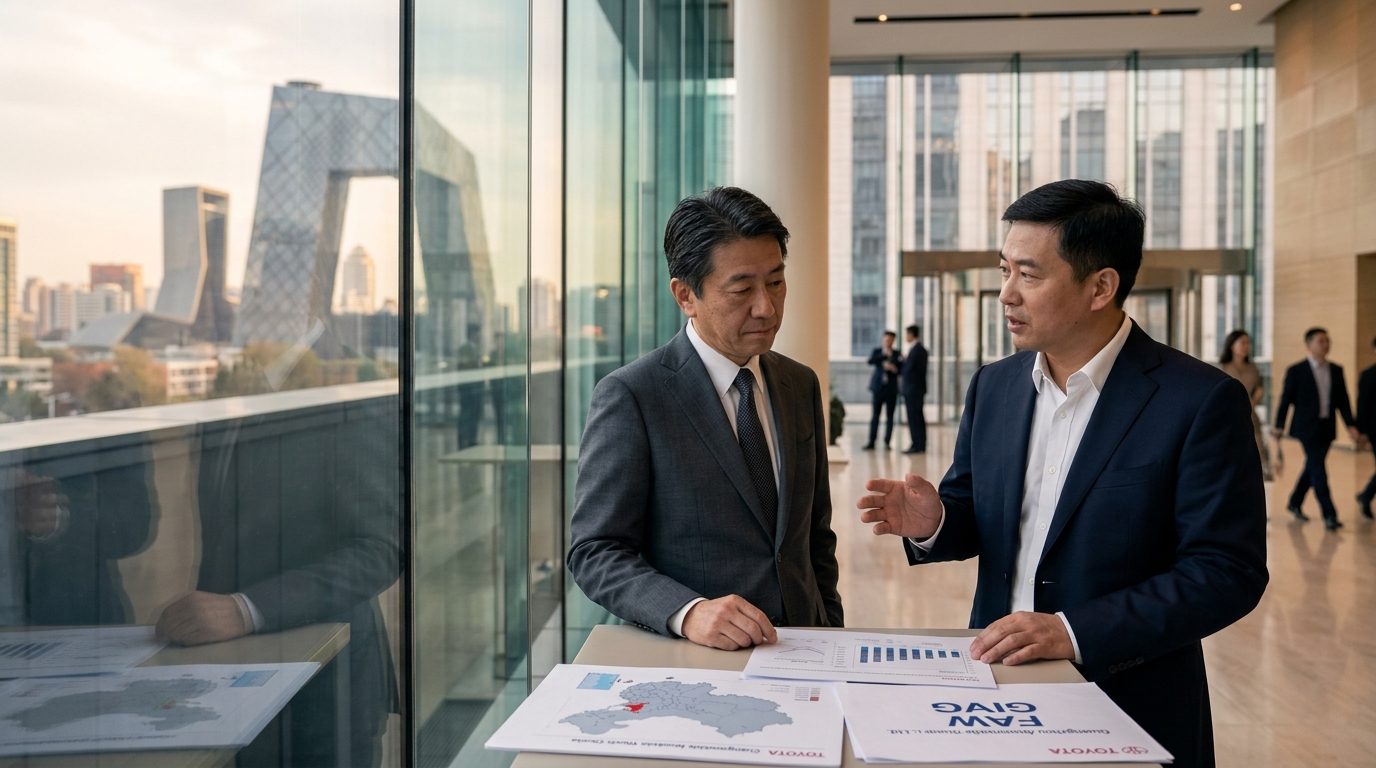
Under an agreement of intent signed Monday, Guangzhou Automobile Group (GAC) will acquire part of the equity interest in a vehicle manufacturing joint venture held by FAW Group and raise supporting funds through the issuance of A shares. Based on preliminary estimates, FAW would become GAC’s second-largest shareholder with strategic influence after the deal. GAC’s A shares have been suspended since September 14 while the restructuring plan is finalized, and the company has said the suspension is expected to last no more than 10 trading days.
According to two individuals familiar with the matter cited by Caixin, the initiative is being driven by regulatory authorities, with the potential for FAW Group to secure equity through asset allocation, effectively establishing a joint-venture relationship between the two automotive giants. The unnamed joint venture in GAC’s filing is almost certainly FAW Toyota: Reuters reported Tuesday that Chinese state media said the undisclosed target was FAW Toyota, citing sources.
Under the proposed structure, strongly advocated by Toyota’s Japanese side, Toyota would hold 50% in a merged Toyota sales company in China, with FAW and GAC holding 25% stakes each, Reuters reported. Dealer networks would be fully integrated under the new company, allowing it to sell and service all Toyota models in China. That would end Toyota’s longstanding dual-JV arrangement, where FAW Toyota and GAC Toyota have operated as separate commercial entities for more than two decades.
Why Both Partners Are Bleeding
The financial case for consolidation is stark. GAC swung from profit to a net loss attributable to shareholders of RMB8.78 billion in 2025, and net losses widened 75.98% year-on-year to RMB4.47 billion in H1 2026. FAW Toyota sold 273,700 vehicles in January through August 2026, down 27.4% year-on-year, with its bZ3 moving only about 10,300 units in the first eight months.
The broader market is just as punishing. Total retail sales reached 11.716 million units in the first eight months of 2026, down 20.8% year-on-year, while NEV penetration hit a record high of 65.2% in August. Foreign-brand joint ventures have been the primary casualties. Toyota China’s cumulative sales in H1 2026 reached 694,700 units, down 17.1% year-on-year.
The contrast between the two Toyota ventures is telling. GAC Toyota has been far more aggressive in its NEV transition, backed by strong support from Toyota’s headquarters, with the bZ3X and bZ7 described in local reports as highly localized products defined by Chinese teams and developed around China’s local supply chain. FAW Toyota’s NEV contribution, by comparison, is negligible within its overall sales structure.
The Policy Backdrop
China’s Ministry of Industry and Information Technology and eight other government departments jointly issued the 15th Five-Year Plan for the Development of the Intelligent Connected New Energy Vehicle Industry on September 11. The plan calls for tighter oversight of vehicle and battery capacity, and encourages mergers and restructuring while curbing improper local investment incentives. The FAW-GAC move, announced three days later, fits that framework precisely.
Given past precedents, complex regional interests and the delicate coordination process between central and local governments are expected to become decisive variables determining the ultimate success or failure of this deal. No definitive agreement has been signed, and the transaction remains subject to internal and regulatory approvals.
What Traders Should Watch
- Toyota (7203.T): The merged JV structure would give Tokyo a cleaner, better-capitalized single China partner. Whether Toyota formally confirms its preferred 50/25/25 ownership split is the next disclosure to track.
- GAC (2238.HK / 601238.SH): A-shares remain suspended. When trading resumes, the reaction will signal how the market prices the dilution from the share issuance against the strategic logic of absorbing a FAW Toyota stake.
- BYD, NIO, XPEV: A leaner, unified Toyota China entity competing more aggressively in NEVs raises the competitive pressure on domestic brands that have grown accustomed to joint-venture weakness.
- CATL: Any supply consolidation between FAW Toyota and GAC Toyota battery procurement touches CATL directly, as both ventures are customers.
The structural question is whether merging two underperforming ventures produces one stronger competitor or simply one larger problem. Beijing is betting on the former.