Moderna spent most of the last two years widely written off. Its COVID vaccine revenues were collapsing, its pipeline looked expensive and speculative, and analysts debated whether the company would need to raise capital. The stock bottomed and then did something unexpected: it became the best-performing S&P 500 stock of 2026, up about 750% year to date, driven by a cancer vaccine result that the biotech world had been watching for years.
In August, Moderna and Merck announced positive Phase 3 data from the INTerpath-001 trial of intismeran autogene in combination with Merck’s Keytruda in patients with completely resected Stage IIB-IV melanoma. The combination reduced the risk of recurrence or death by 42% compared to Keytruda alone. It also reduced the risk of distant metastasis or death. In October, detailed results were presented at the ESMO Congress 2026, confirming what the August release had outlined. Moderna and Merck described it as the first positive Phase 3 readout for an individualized neoantigen therapy and for any mRNA-based cancer treatment. The companies are preparing regulatory submissions.
Then, on November 6, Moderna reported Q3 results that added a second layer. Revenue came in at $1.3 billion, 29% above the year-ago period. The company raised its full-year revenue growth outlook. Management confirmed the Analyst Day is tomorrow, November 12, held in person at Moderna’s intismeran manufacturing site in Marlborough, Massachusetts.
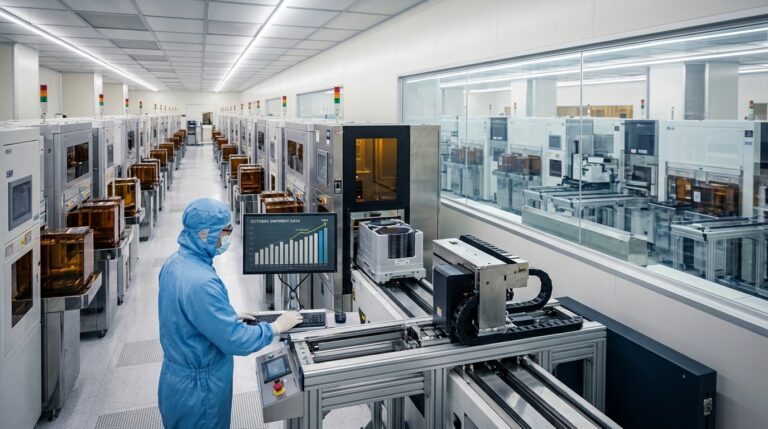
That event is the reason investors are paying attention today. Intismeran is not a single drug. Moderna and Merck have described an INTerpath clinical development program that extends beyond melanoma into other tumor types. The five-year Phase 2b melanoma data, presented at ASCO in June, showed a 49% reduction in recurrence or death risk compared to Keytruda alone. The Phase 3 confirmation narrows the gap between clinical promise and commercial reality considerably. Analyst Day will likely show how management intends to accelerate that path and how the manufacturing facility scales to meet individualized therapy demand.
The valuation is not simple. Moderna remains loss-making on a trailing basis, with a negative TTM EPS, and its price-to-sales ratio has expanded well beyond historical norms as the stock has surged. Any slip in pipeline execution or FDA timeline would punish the stock quickly.
The counterargument is that the company now has a confirmed Phase 3 result in one of oncology’s highest-profile indications, with a commercial partnership backed by Merck, whose Keytruda is one of the world’s top-selling cancer therapies. That combination provides regulatory and commercial infrastructure most biotech companies spend a decade trying to build. Tomorrow’s event will determine how much of the remaining optionality the market is willing to price in now.