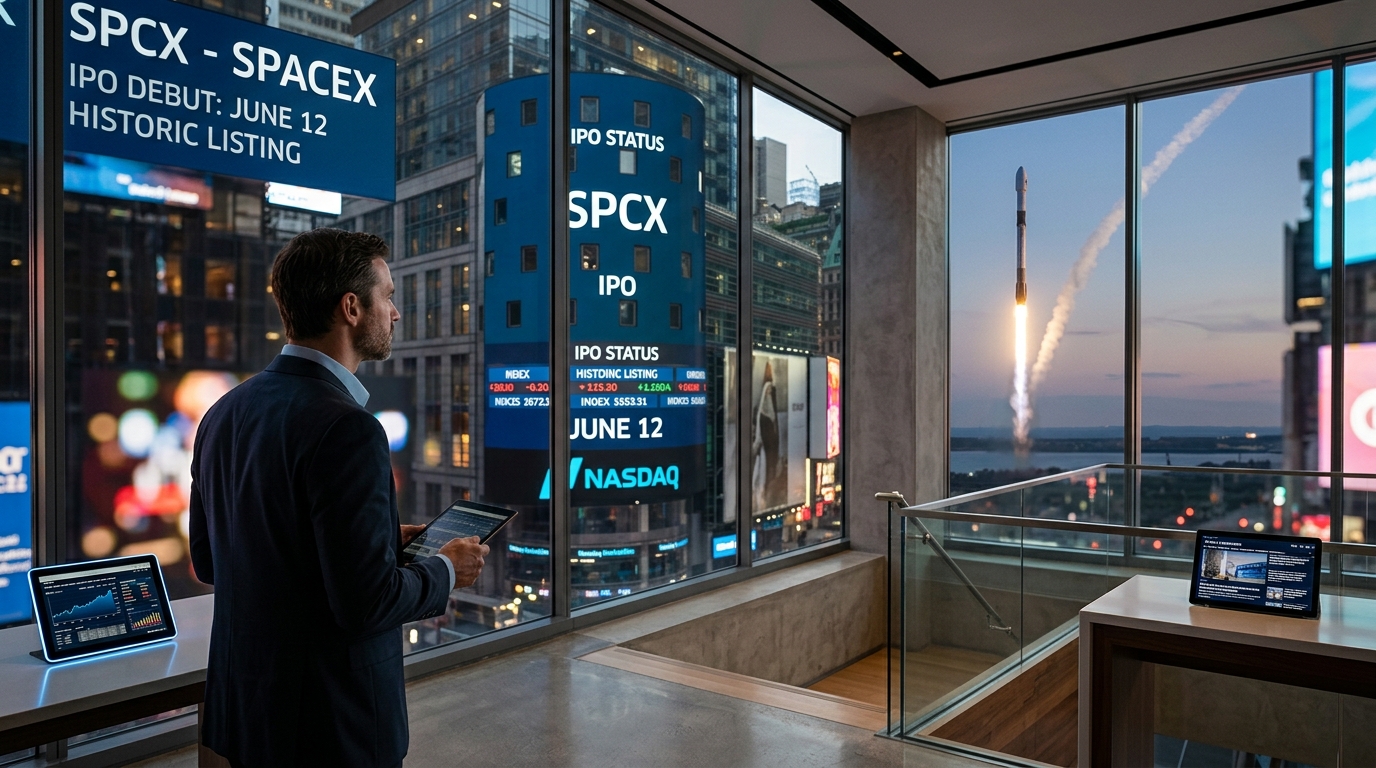
The roadshow launched June 4. The ticker is SPCX. The debut date is June 12. And if the numbers hold, SpaceX won’t just be the biggest IPO of 2026 – it could be the largest in the history of the stock market.
Let that land for a second.
Saudi Aramco raised $29.4 billion when it went public in 2019. That was the record. SpaceX is reportedly targeting a $75 billion raise at a fixed price of $135 per share – no price range, no bookbuilding, just a number. That’s more than 2.5x Aramco. More than triple the size of Alibaba’s U.S. debut. More than any offering ever attempted.
The valuation: approximately $1.77 trillion, which would make SpaceX the seventh-most valuable company in the country – sitting above Tesla.
What’s Actually Inside the Filing
This is where it gets complicated. SpaceX posted a $4.28 billion net loss in Q1 2026 alone and carries an accumulated deficit of $41.3 billion. Revenue over the last four quarters came in at $19.3 billion – growing, but at just 15% in Q1. Starlink accounts for roughly 58% of that total, and it’s the clearest business case in the filing.
The AI segment – built around xAI, which Musk merged into SpaceX in February – is burning roughly $2.5 billion per quarter. R&D costs in that division skyrocketed over 300% last year. That’s not a rounding error. That’s a company betting enormously on orbital AI compute, claiming it’s building something no competitor can replicate at scale.
One detail that’s gotten less attention than it deserves: Elon Musk will retain over 82% voting control post-IPO. Goldman Sachs is leading the deal. And in an unusual move, up to 30% of the IPO float is being allocated to retail investors – roughly three times the standard allocation for a mega-cap offering.
The Part People Are Skipping Over
The valuation math is the real conversation. Based on trailing revenue, SPCX would trade at a price-to-sales ratio of approximately 100 – well above even the most expensive Magnificent Seven names. Anthropic, which filed its own confidential S-1 just last week, is coming to market with a $47 billion revenue run rate and a valuation near $965 billion – implying a far lower sales multiple by comparison.
That gap is what analysts are quietly debating right now. SpaceX has the brand, the launch infrastructure, Starlink’s subscriber base, and the audacity of orbital data centers. But the financial profile at $1.77 trillion demands a belief in future economics that don’t exist yet in the S-1.
Worth watching closely when SPCX hits Nasdaq on June 12 – not just the open, but what happens after the lock-up clock starts ticking.
Disclaimer: This article is for informational and educational purposes only. It does not constitute investment advice or a recommendation to buy or sell any security. All financial data referenced is sourced from public filings and third-party reports. Investing involves risk. Past performance is not indicative of future results. Always consult a qualified financial advisor before making investment decisions.