
The week of October 1 produced two nuclear headlines that look like cousins but are actually different animals. On September 30, Constellation Energy and Amazon signed a 20-year power purchase agreement covering 690 megawatts from Calvert Cliffs in Maryland, enabling more than $3 billion in infrastructure investment, including roughly 190 megawatts of new generating capacity coming online between 2030 and 2032. Wall Street noticed. The stock moved. Analysts updated their models.
Then, two days later, a quieter story broke in Wisconsin with a different structure entirely, and a better entry point for investors willing to read it carefully.
Why This Stock Now
On October 2, Oracle and We Energies announced a nuclear power subscription deal in which Oracle agreed to subscribe to 10-20% of the output from the Point Beach Nuclear Plant, amounting to 125-250 megawatts. The agreement is expected to save customers approximately $300 million in fuel costs. The beneficiary of that arrangement, structurally and financially, is WEC Energy Group (NYSE: WEC), We Energies’ Milwaukee-based parent.
This is not a merchant-power bet. WEC is a regulated utility, which means the investment case is slower and steadier than Constellation or Vistra. That is also precisely why it deserves attention right now. The Oracle subscription reframes WEC’s most expensive liability as a clean-power asset, and it does so at a moment when the Public Service Commission of Wisconsin is preparing to rule on the company’s rate cases.
The Business
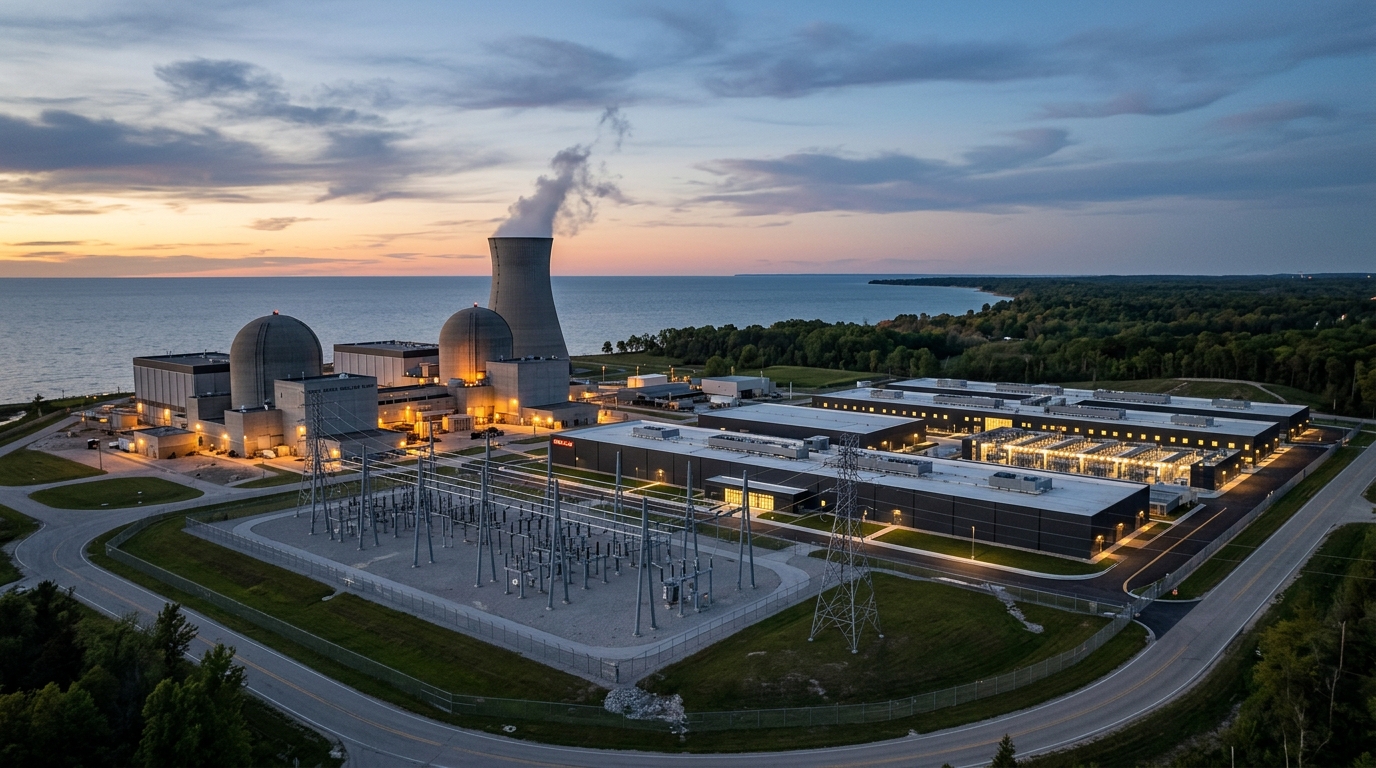
Point Beach is Wisconsin’s sole active nuclear facility. It is a two-unit plant with about 1,033 megawatts of nameplate capacity. That longevity matters. Every competing developer trying to contract clean firm power for a hyperscale campus in the Midwest is working around a two-decade queue for new nuclear. WEC already holds the output.
The NRC has extended operating licenses for both units through October 2050 (Unit 1) and March 2053 (Unit 2). That matters.
WEC has also entered into an agreement with NextEra to extend the Point Beach power purchase agreement for about 1 gigawatt of carbon-free capacity, with Unit 1 extended from October 2030 to October 2050 and Unit 2 from March 2033 to March 2053. The company is seeking Wisconsin PSC approval for that extension as well.
Why Wall Street Is Paying Attention
The data center demand wave hitting WEC’s territory is not modest. Vantage Data Centers is developing a large campus tied to OpenAI and Oracle’s Stargate initiative, with four data center buildings under construction on roughly 672 acres in Port Washington, expected investment of $15 billion or more, and site potential that could reach multi-gigawatt scale over time. Microsoft is separately building in the region. A recent draft report from state utility regulators showed electricity demand in Wisconsin could increase by more than 40 percent by 2032, driven by hyperscale data centers.
Q2 2026 EPS rose to $0.91, up $0.15 year-over-year, driven by strong execution. The company reaffirmed 2026 EPS guidance of $5.51- $5.61 and a $37.5 billion five-year capital plan, with major projects and regulatory approvals advancing. WEC is aiming for a compound annual growth rate of 7 to 8 percent in EPS over the next five years.
What’s Driving the Opportunity
The Oracle subscription does something structurally important: it converts a rising-cost obligation into a shared burden. The existing Point Beach agreement involves annual price increases passed on to customers through their electric bills. By having Oracle absorb a slice of that escalation, WEC softens the ratepayer exposure that has been the loudest objection in its pending rate cases.
Regulators are expected to rule on We Energies’ 2027 and 2028 rate cases in Q4 2026. A favorable PSC ruling, amplified by the Oracle subscription approval, would remove two of the three overhangs that have kept WEC’s stock range-bound for most of 2026. The third, execution on the $37.5 billion capital plan, is already underway.
What Could Go Wrong
Regulatory risk is the primary variable. The proposed subscription requires Public Service Commission of Wisconsin approval, and We Energies has said it will submit full agreement details to the commission for review. A hostile commission could restructure or reject the arrangement.
Valuation is not cheap. As of September 30, WEC traded at about 19.5 times trailing earnings. Consensus analyst price targets cluster around the low $120s against a current price in the low $100s, and the company is expected to report Q3 earnings on October 29.
The Bottom Line
Constellation and Vistra get the momentum trade when nuclear headlines run. WEC gets overlooked because it is a regulated utility rather than a merchant generator. That gap is where the opportunity sits. An existing, licensed, multi-decade reactor tied to an Oracle data center, with about $300 million in potential ratepayer savings on the table, is a combination no competitor can replicate from scratch this decade. The PSC decision expected in Q4 2026 is the catalyst that closes the discount. Position ahead of the October 29 earnings call, when management will almost certainly address the Oracle subscription terms for the first time on a public call.