The Surface Transportation Board handed investors a useful clarification on August 18: anyone holding Norfolk Southern as a merger arbitrage trade should get comfortable with at least two more years of regulatory calendar. The STB announced that the earliest it would make a final decision on Union Pacific’s proposed acquisition of Norfolk Southern would be the second half of 2027. Final briefs are due May 28, 2027, with the record close date still to be determined and a final decision due within 90 days after that. That is not a merger arbitrage. That is a long-duration regulatory bet.
Why This Stock Now
The question the STB’s schedule raises is not whether the UP-NS deal eventually closes. It is whether parking capital in that outcome is the best use of the rail sector’s current momentum. The answer is no. CSX is running one of the strongest freight businesses in the country right now, carries none of the deal risk, and is the more compelling buy today.
The Business
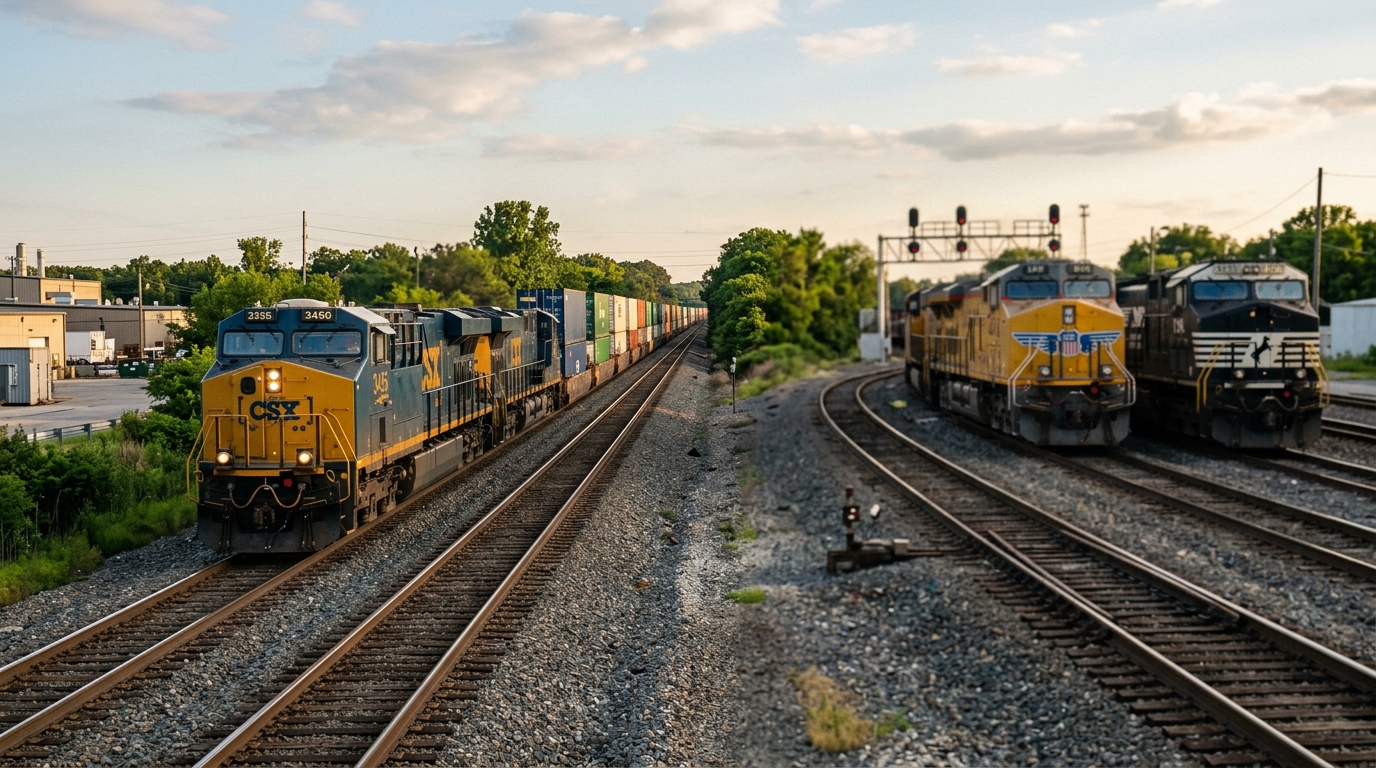
The proposed UP-NS combination would create the nation’s first modern coast-to-coast freight network and unite two of the six remaining Class I railroads. The strategic logic is real. But competing companies including BNSF and CSX, along with shipper groups, have requested the STB adopt the longest evidentiary period permitted by law. The STB also directed Union Pacific and Norfolk Southern to refile certain workpapers without screening or filtering criteria so regulators can review complete datasets. Every new data request adds friction and timeline risk. Union Pacific is required to pay Norfolk Southern a termination fee of $2.5 billion under specified circumstances related to a termination of the merger agreement. That break fee offers NSC holders some downside cushion, but it does not compensate for two years of opportunity cost.
Why Wall Street Is Paying Attention to CSX
CSX just delivered its best quarter on record. The company reported second quarter 2026 operating income of $1.51 billion and net earnings of $1.00 billion, or $0.54 per diluted share. That compares to operating income of $1.28 billion and net earnings of $829 million, or $0.44 per diluted share, in the second quarter of 2025. The stock reacted accordingly.
Several institutional-position articles released in late August describe recent purchases and new positions in CSX shares by asset managers. The stock closed at $52.00 on August 24, keeping the railroad operator’s valuation supported by a mix of dividend income and solid recent earnings.
What’s Driving the Opportunity
The Q2 numbers were not a one-quarter anomaly. Intermodal revenue rose 26% on 9% higher volume, coal revenue grew 9% on 4% higher volume, and merchandise revenue grew 8% with a 4% increase in volume. Management shifted guidance to mid to high single-digit revenue growth, with margin expansion expected to be greater than 350 basis points and free cash flow growth projected above 80%.
Stronger intermodal volumes, as shippers shifted more freight to rail amid higher fuel and trucking costs, underpinned the profit improvement. That structural shift is not going away. The Howard Street Tunnel project is now open, and the full volume and pricing benefit will likely materialize during the next cycle in late 2026 and 2027. CSX is positioned to capture that volume while UP and NS are occupied filing workpapers with regulators.
What Could Go Wrong
CSX trades at a price-to-earnings ratio of about 30x. That is not cheap by historical rail standards. Fuel prices created a 160 basis point headwind on operating margins, and there are concerns about potential momentum slowing in Automotive and Chemicals in the second half. Service metrics including terminal dwell and trip plan performance are not yet at desired levels. A freight demand slowdown would hurt the bull case quickly given the valuation. And if the STB unexpectedly accelerates the UP-NS decision, capital might rotate out of CSX toward the merger spread.
The Bottom Line
The STB’s August 18 schedule did not just delay a merger. It clarified the opportunity cost of waiting for it. With final briefs due May 28, 2027, and the STB then having 90 days to rule after the record closes, a decision would come in the second half of 2027 at the earliest. That is a long time to sit in an arb position when the sector’s strongest operating business is compounding at a 23% earnings growth rate with improving guidance and institutional accumulation already underway. CSX is not a merger story. It is the rail story, and right now that matters more.