Energy wasn’t supposed to be the story of 2026. After years of sector rotation away from oil and gas, most investors had quietly moved on. Then February happened.
When conflict disrupted flows through the Strait of Hormuz in late February, Brent and West Texas Intermediate crude — which had started the year near $60 per barrel — went near vertical. WTI hit an April peak of $114.58, and while prices have since eased into the low-to-mid $90s, the damage to the bear case for energy stocks is already done. The sector is now up roughly 25–34% for the year, making it the best-performing corner of the S&P 500 in 2026 — and it’s not particularly close.
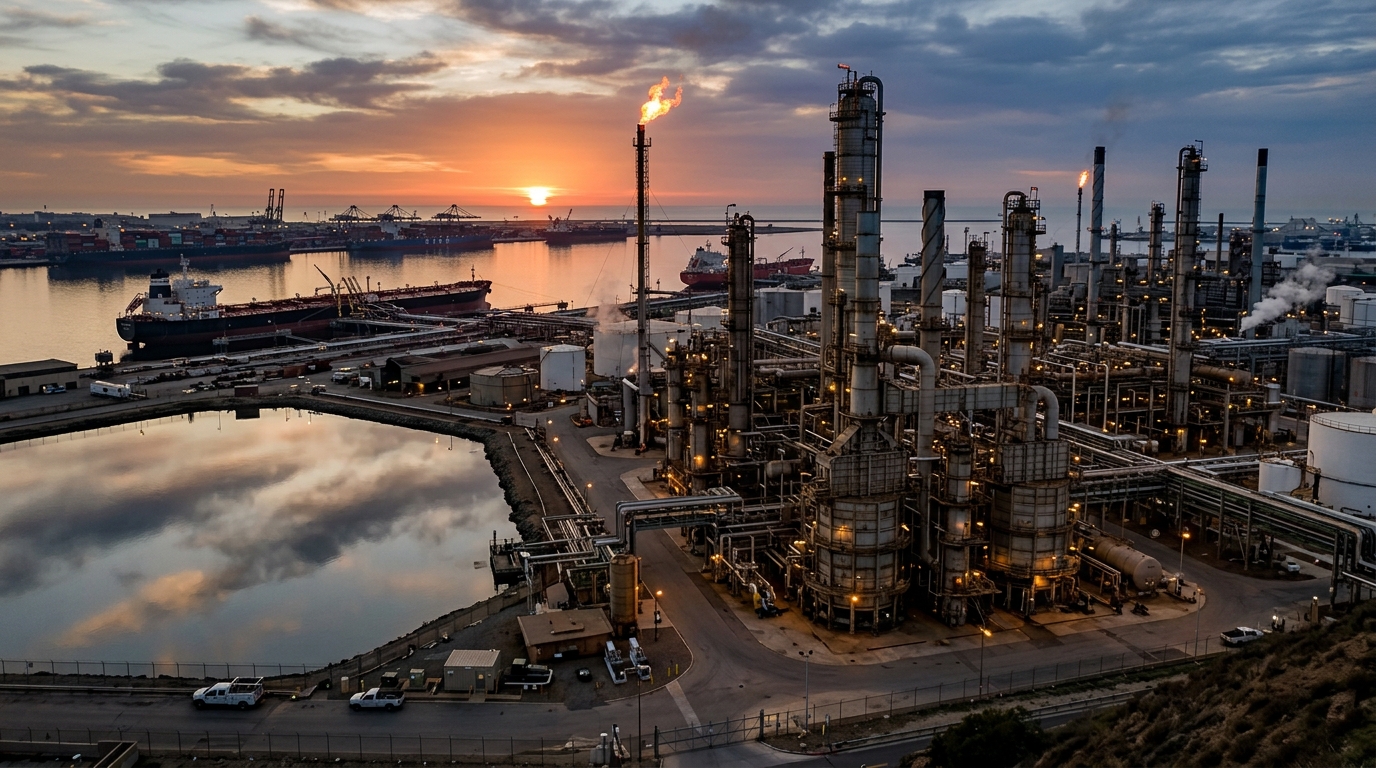
Inside that rally, one name has stood out: Occidental Petroleum (NYSE: OXY).
Why OXY, Specifically
OXY is up approximately 35% year-to-date as of early May — ahead of peers like EOG Resources (+29%) and ConocoPhillips (+27%). Part of that is commodity beta. When oil spikes, Permian-weighted producers with high leverage to price move fastest. OXY checks that box.
But the more interesting story here is the balance sheet reset that quietly happened at the start of the year. On January 2nd, Occidental closed the sale of its OxyChem chemicals division to Berkshire Hathaway for $9.7 billion. Management used those proceeds to fund $5.8 billion in principal debt reduction — a move that cleaned up years of baggage from the 2019 Anadarko acquisition and refocused the company on its core Permian oil and gas business.
The operational picture backs it up. In 2025, CEO Vicki Hollub reported record production of 1.4 million BOE per day, $4.3 billion in free cash flow at lower oil prices, and $275 million in operating cost reductions. With crude now trading 25–30% above those baseline assumptions, the 2026 free cash flow trajectory looks materially better. Management has also flagged an additional $500 million in cost savings expected this year, building on $2 billion in cumulative reductions since 2023.
Production capacity comes from a 16.5 billion BOE resource base — more than 30 years of low-cost inventory, with 84% of that breaking even below $50 per barrel. At current prices, that’s a significant margin of safety on the cost side.
The Berkshire Factor
It’s worth spending a moment on the elephant in the room — and not in a dismissive way. As of Q1 2026, Berkshire Hathaway holds 264.9 million shares of OXY, representing roughly 26.6% of the outstanding shares and a $17.2 billion position. Warren Buffett has publicly stated Berkshire may own OXY indefinitely.
That kind of concentrated institutional backing does two things: it limits downside on severe dislocations, and it creates a governance signal that matters. Buffett doesn’t hold large positions in companies he doesn’t believe have durable earning power at moderate oil prices. At $75/barrel, independent estimates put owner earnings near $5.30 per share — a figure that implies a very different valuation than the war-premium price currently assigned to crude.
What Could Go Wrong
Oil’s volatility is not a feature — it’s a structural risk. WTI is already in the 98th percentile of its 12-month range, which means mean-reversion pressure is real. A ceasefire or de-escalation in the Middle East could shave $15–20 off the barrel price in a matter of days. That kind of move would compress OXY’s earnings and likely its multiple simultaneously.
The Berkshire premium in the stock also works both ways — it may be artificially suppressing the free float in ways that amplify price swings during rotation. And while the balance sheet has improved substantially, it’s not pristine — debt from the Anadarko deal still lingers even after the OxyChem proceeds were applied.
None of that makes the thesis wrong. It makes it conditional — specifically on where oil settles once the geopolitical dust clears. Investors willing to hold through that volatility may find OXY’s combination of operational efficiency, reserve depth, and institutional backing to be a compelling setup for the second half of the year.
The full breakdown is worth your time.
This article is for informational purposes only and does not constitute investment advice. Investing in commodities-related equities carries significant risk including the potential loss of principal. Past performance is not indicative of future results.