Here is a question worth sitting with: when does a utility stop being a utility and start behaving like an infrastructure developer with a captive sovereign lender? For NextEra Energy (NEE), the answer may be September 8, 2026.
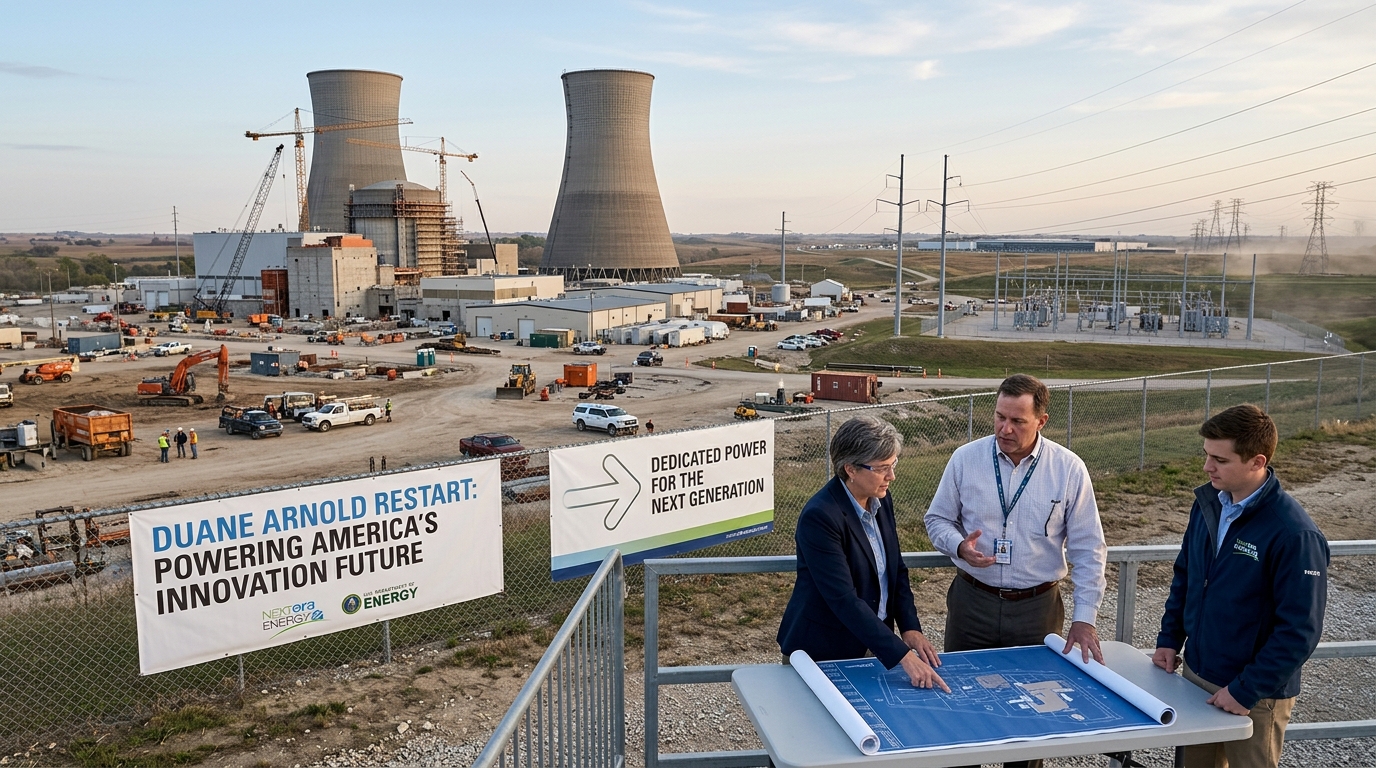
NextEra and the U.S. Department of Energy, through its Office of Energy Dominance Financing, reached a combined conditional commitment and financial close on a loan of up to $1.9 billion to support the restart of the Duane Arnold Energy Center in Iowa. That is not a grant. It is a loan. But the terms matter less than the structure: the federal balance sheet is now the primary lender on one of the most closely watched nuclear comeback projects in the country.
The plant permanently ceased operations on August 10, 2020, and amid a nationwide surge in electricity demand from data centers, the DOE closed the loan to support NextEra’s restart effort. The Duane Arnold Energy Center is a 615-megawatt nuclear facility in Linn County, Iowa. Small by the standards of new builds, but the point is not size. The point is contracted revenue.
Why the Google PPA Changes the Return Math
NextEra’s 2025 agreement with Google calls for Google to purchase carbon-free nuclear energy from the plant for 25 years to support its cloud and AI infrastructure in Iowa. But it is not the entire plant: NextEra has also said one of the plant’s current minority owners, Central Iowa Power Cooperative (CIPCO), will purchase the remaining portion of the plant’s output on the same terms as Google. That is not a merchant plant. That is a contracted cash flow stream dressed as a reactor.
The structure is unusual in the best way for NextEra’s investors. Google underwrites much of the revenue, and CIPCO covers the balance. The DOE underwrites the debt. NextEra operates the asset and captures the spread. According to Deputy Secretary of Energy James Danly, the DOE loan is the final piece of financing the energy center needs. With debt financed and revenue contracted, the residual equity risk sitting on NextEra’s books is primarily execution: getting the plant cleared through the regulatory path, renovated, and running.
The project cleared a major state regulatory hurdle in June when the Iowa Utilities Commission issued a certificate authorizing construction and operation, and NextEra aims to bring the reactor back online by the first quarter of 2029, subject to final oversight and licensing actions by the U.S. Nuclear Regulatory Commission.
The Bigger Picture for NEE
Duane Arnold is one tile in a much larger mosaic. Executives have stated they are planning to deliver about 15 gigawatts of new generation to data center power supply hubs by 2035, 6 gigawatts of which will come from new gas-fired resources. Between nuclear restarts, gas development, and its regulated Florida utility, NextEra has said the pipeline of large-load interest at Florida Power and Light has grown to about 21 gigawatts, with roughly 12 gigawatts in advanced discussions and some capacity potentially beginning to come online in 2028.
In April, NextEra delivered adjusted EPS of $1.09, up 10% year-over-year and ahead of the $1.03 consensus. The stock’s valuation has moved around in 2026, but by early September it was closer to about 19x forward earnings in some widely cited market data, versus a five-year average often cited around the high-20s. That gap is where the bull case lives: a company executing on a decade-long contracted build-out, still trading below its historical multiple.
The Risks Investors Cannot Ignore
The NRC process is the single biggest variable. NextEra is targeting commercial operation in the first quarter of 2029, but the NRC still has to complete the actions required to support a restart after permanent cessation, including safety, security, and environmental work tied to restoring the plant’s operating basis. A delay of even one year compresses returns meaningfully on a project where cost is largely fixed.
There is also a ratepayer question that has not been cleanly answered. In coverage of the loan announcement, Iowa Public Radio reported the DOE did not immediately reply to questions about how the financing aligns with the administration’s ratepayer protection pledge around large-load infrastructure. If that becomes a political liability, it could slow the template NextEra is trying to replicate elsewhere.
What to Watch
Two things determine whether Duane Arnold re-rates the stock or merely validates a thesis already priced in. First: NRC progress. Any formal milestone toward restart clearance is a catalyst. Second: whether NextEra replicates this financing structure at other sites. Reuters has reported the company has discussed powering an additional 9 gigawatts of data centers with nuclear capacity. If the government loan model travels to those projects, the capital efficiency story becomes considerably more compelling than the current valuation implies.
The DOE put up to $1.9 billion of federal lending behind a single 615-megawatt reactor. Google committed 25 years of offtake, with CIPCO taking the rest. NextEra is sitting in the middle, collecting value for operating an asset it no longer has to fully finance on its own. That is not a utility business model. It is closer to a toll road, and the market has not fully decided what multiple a toll road with nuclear fuel deserves.