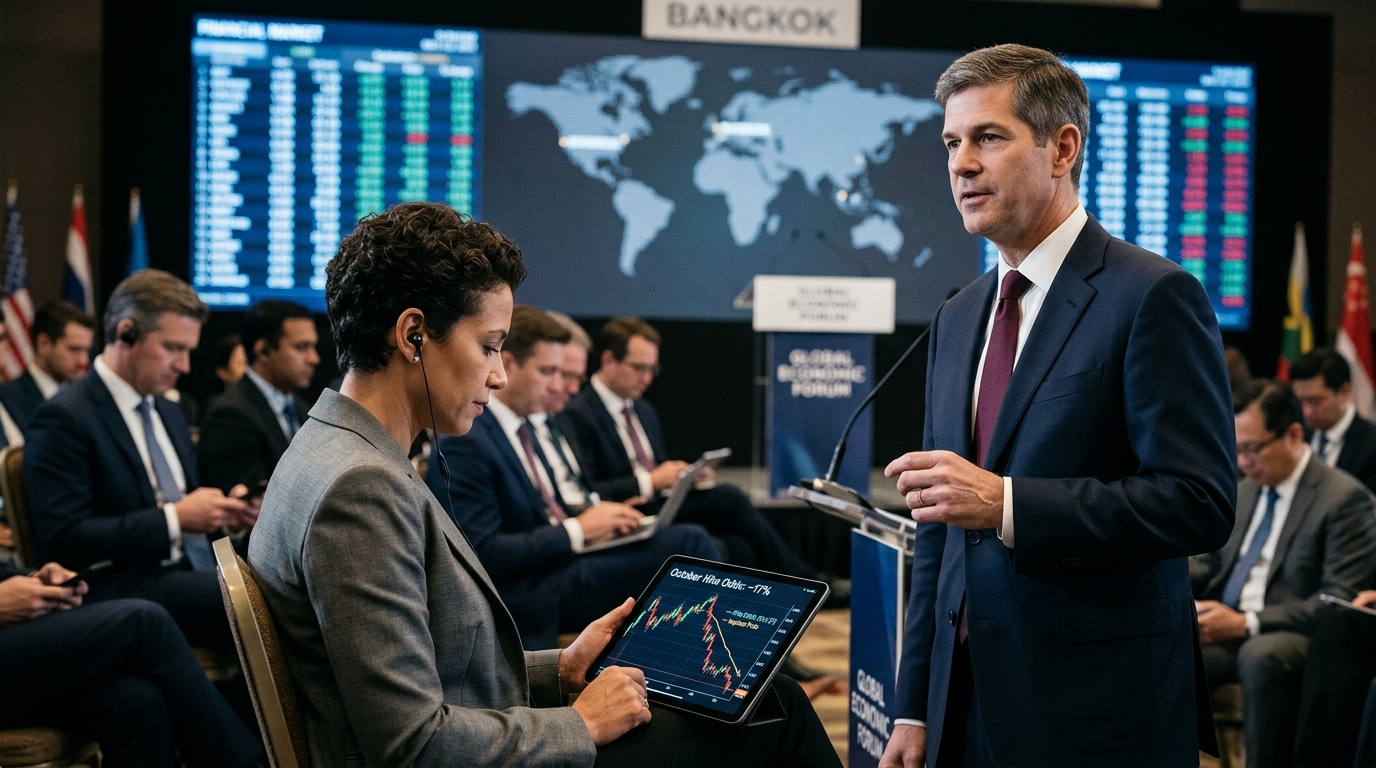
The most consequential thing Kevin Warsh said in Bangkok this morning was nothing. No signal on October. No endorsement of the pause camp. No rebuke of the data. Warsh said he would not prejudge what the Fed will do at its remaining policy meetings this year in October and December. Markets heard a green light anyway.
As he was talking, expectations for a hike at the October 27-28 meeting dropped to about 17% from roughly 30%. S&P 500 and Nasdaq futures rose to intraday highs, the dollar weakened against major currencies, and U.S. Treasury futures edged higher, signaling lower yields ahead. Every major asset moved on a man who said, in effect, he would not tell you what he was about to do.
The backdrop matters here. September CPI rose 3.7% annually. On a monthly basis, CPI rose 0.6%, with gasoline up 9.1% and accounting for more than half of the monthly increase. Thursday’s PPI told a hotter story still: wholesale prices rose 1.3% month on month, the largest increase since March 2022, and core wholesale prices rose 0.7% month on month, well above the 0.3% estimate. The probability of an October rate increase had briefly spiked after the CPI release before retreating as the week wore on. Warsh’s silence this morning accelerated that retreat.
The question worth asking: is the pricing justified?
From a policy signaling perspective, Warsh’s remarks are better interpreted as preserving flexibility rather than a clear dovish pivot. He did not signal an upcoming hike, nor did he commit to halting tightening. He was speaking at the IMF and World Bank annual meetings in Bangkok, and he offered no fresh signals on the October decision. That is a statement about process, not direction.
Goldman Sachs chief economist Jan Hatzius has said the bank pushed its forecast for the next and final move from October to December. That read is plausible, but it rests on inference, not instruction. Warsh made little effort to steer market expectations for the October meeting. Saying little about CPI is not the same as dismissing it.
The Fed raised rates to a range of 3.75% to 4% last month, its first hike since 2023. The 10-year Treasury yield sat at 5.08% as of October 15, still historically elevated and still above the upper bound of the fed funds range, a configuration that keeps the pressure on. Energy prices drove much of September’s CPI overshoot, with gasoline doing much of the work. If energy retreats, the case for a pause in October strengthens. If it holds, December may not be enough.
Chicago Fed President Austan Goolsbee offered the most honest framing two weeks ago. Asked whether the Fed ought to raise rates or pause, he said “there is plenty of room for anything to be on the table” and called for evidence that inflation is headed back to 2%. That evidence has not arrived. What arrived instead was a Fed chair who declined to say otherwise, and a market that decided that was good enough.
Twelve days remain before the October 27-28 decision. Bangkok was not the last opportunity for public pronouncements on monetary policy from U.S. central bankers before the Fed’s late-October meeting, but the blackout period begins shortly. The next inputs are the data themselves. Watch oil prices and any further read on core services inflation. Those two variables will do more to settle the October question than anything Warsh chose not to say in Bangkok.