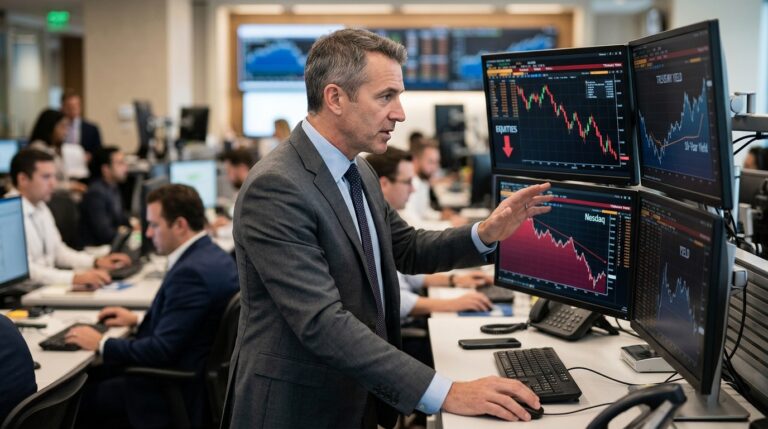
Asian markets gave US traders an unambiguous overnight warning on Thursday. South Korea’s KOSPI closed down 3.52% at 5,533.76, while Japan’s Nikkei 225 fell 2.65% to 62,907.84, dropping below 63,000 for the first time since September 14. Wall Street had finished higher on Wednesday. The divergence was not random: it was a verdict on AI capital expenditure, delivered by the two markets most exposed to it.
Samsung Electronics fell 4.02% to 214,500 won and SK Hynix declined 5.48% to 1.223 million won. In Tokyo, Advantest dropped 6%, Tokyo Electron fell 7%, and SoftBank Group slid 6.9%. SoftBank’s market value has now fallen by about half from its June peak. The company has committed substantial capital to OpenAI, completing a $10 billion final instalment on October 1 and taking cumulative investment to $64.6 billion. That concentration is precisely why the AI spending debate hits Tokyo as hard as it does Seoul.
The catalyst driving both markets is the same: investors are looking out to 2027 and questioning whether AI capex will continue, with caution spreading broadly. Concerns have grown after bonds from US cloud provider CoreWeave fell to distressed levels, highlighting financing risks across the industry. When the credit market flags a problem with AI project returns, equity markets in Seoul and Tokyo do not wait for confirmation.
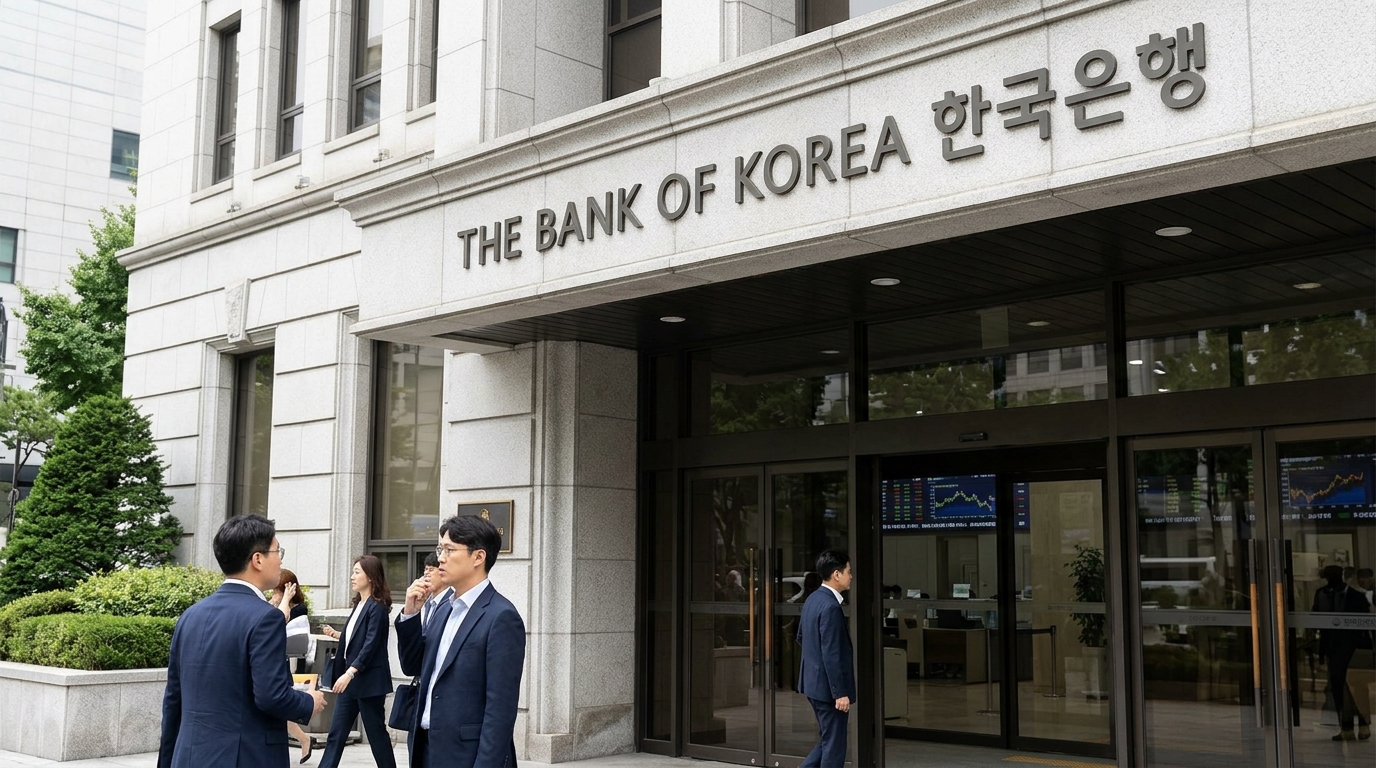
The piece of Thursday’s news that matters most for US chip positioning came from the Bank of Korea’s press conference, not the closing prices. Governor Shin Hyun-song said the recent decline in share prices is causing a temporary pullback in consumption, saying share-price corrections are affecting the real economy. That is a new and meaningful development. An equity selloff entering a central bank’s reaction function means it is no longer just a positioning story. It is a growth story.
South Korea’s Monetary Policy Board held the base rate at 3.00% on October 22, pausing after back-to-back hikes in July and August that raised rates by a combined 50 basis points, with the pause meant to assess the ripple effects of cumulative tightening. Markets are reading the hold not as the end of tightening but as a hawkish pause, leaning toward another hike in November. A further hike into a consumption slowdown driven by the equity correction would tighten the vice on Korean households from both directions.
For traders watching US semiconductors, the overnight session clarifies what the risk is. Investors are questioning whether strong chip demand can justify AI investment costs, with AI credit and profitability risk capping upside. When sentiment shifts on the AI capex cycle, the lack of diversification in the KOSPI’s upper echelons exacerbates the downside, and that dynamic now has a currency dimension: a consumption warning from the BOK keeps the won under pressure, complicating any rebound in Korean export stocks priced in dollars.
The action plan is straightforward. Watch whether US chip names with Korea or Japan supply-chain exposure gap lower at the open, confirming the overnight signal or fading it. If the KOSPI opens Friday below 5,533 on heavy volume, the de-rating has further to run. If SoftBank’s credit default swap spreads widen again, treat that as the leading indicator, not the equity price. The question the market is asking is not whether AI spending will grow. It is whether the returns justify the cost of the debt financing it, and right now, two central-bank-sized markets think the answer is no.