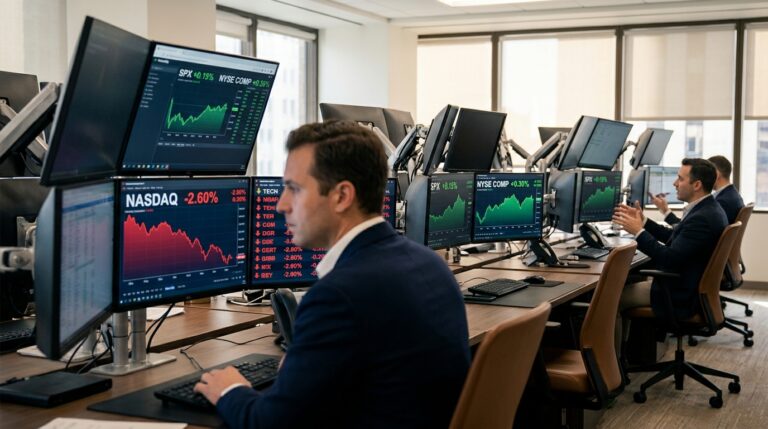

Thursday’s bond market move will fill a lot of inboxes with bullish rate commentary. Resist the temptation. The 10-year Treasury yield closed at 4.953% on October 22, falling 19.3 basis points from the previous session, in what Reuters described as the largest single-day decline in three years and seven months, since March 10, 2023. That is a significant number. What it is not is a signal that the rate environment has turned.
The cause matters enormously here. Reuters reported that investors pulled money out of AI trades and bought Treasuries on fears that AI spending may not hold up beyond next year. That is a flight-to-safety rotation, not a reassessment of the inflation outlook. Bonds went up because equities went down. The yield fell because fear spiked, not because the economy got cooler.
Analysts noted the drop came even though the forces that had driven yields higher remain in place. Which is the problem with reading Thursday as a rate-market development at all.
What Oil Is Saying
Brent crude is not confirming anything the bond rally implies. Reuters reported oil climbed about 4% to a five-month high, with Brent futures settling at $113.17 a barrel on Thursday, driven by Houthi attacks on Saudi infrastructure and escalating Middle East tensions. Reuters also reported Brent was on track for a weekly gain of about 3.3%, its third consecutive week of gains. Oil at these levels is a persistent producer-price input, and producer prices were already running hot before this week’s supply shock.
This creates a genuine contradiction. Bonds are pricing fear. Oil is pricing inflation risk. Both cannot be right about the direction of monetary policy, and the October 28 FOMC meeting is six days away.
Where Warsh Fits
Fed funds futures suggest markets are largely positioned for a hold at the October 28 meeting. That looks like conviction. It is probably complacency. Fed Chair Kevin Warsh has criticized traditional forward guidance, and elevated inflation with relatively loose financial conditions could still inform the case for another increase. The market has some experience getting Warsh right. But Warsh has told audiences he is not providing forward guidance, and investors have repeatedly treated that absence of guidance as guidance. That circularity is worth noting.
Traders are surer a hike comes before year-end than that it comes in October, with December around 72% on Kalshi. The base case is a hold this month and a hike in December, and that is probably right. But with Brent at $113 and a Fed chair who has explicitly said he will not pre-commit to anything, the low single-digit hike odds that prediction markets currently show for October feel too serene.
Where It Shows Up
Long-term Treasury bond ETFs jumped nearly 2% as yields fell, with TLT rallying sharply. That move is real, but conditional. If Thursday’s tech-fear catalyst fades and oil holds above $110, TLT’s gains will be among the first to reverse. ING’s Padhraic Garvey noted the 10-year yield broke back below 5% “with some conviction” but said, “We’re not convinced it keeps on going.” The 2-year yield, more directly tied to Fed expectations, also fell sharply, a move that markets may need to unwind if Warsh delivers a hawkish tone on October 28 even without a hike.
What to Watch
The FOMC statement lands Wednesday at 2 p.m. ET. The statement’s language on inflation, and Warsh’s press conference tone, will matter far more than the rate decision itself. A hold with a hawkish statement could push the 10-year back above 5% within the week. Oil holding above $110 into the meeting would reinforce that read. Watch whether TLT can stay above its pre-selloff level, and whether the 2-year yield confirms or contradicts whatever signal the 10-year is sending. Right now, those two markets are speaking different languages.